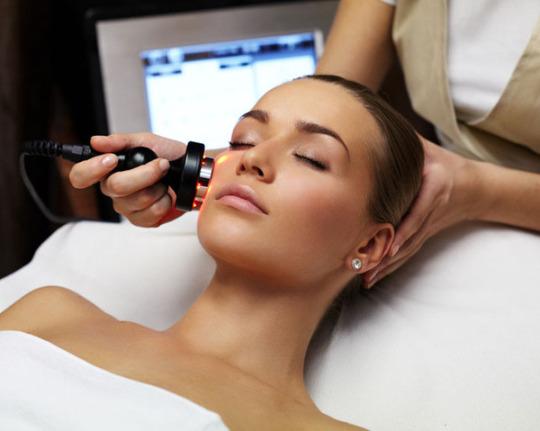
Want plusher lips, defined cheekbones, or a stronger jawline? One of these fresh options could be right for you. (Photo: Shutterstock)
This month’s beauty innovator, dermatologist Whitney Bowe, M.D., spoke to Women’s Health about her favorite new anti-aging tweaks:
In
2015, women want to look like the best versions of themselves—not
overly plumped or pinched. The good news is that among the cutting-edge
tools and technologies we have to help take control of the aging
process, there are now great options that give subtle, natural-looking
results without a lot of downtime. In other words, small, minimally
invasive treatments that can help stave off major wrinkles and sagging.
Here are a few ways to look your most youthful and refreshed.
Plusher Lips
No more duck face! Restylane Silk is the first filler designed and
specifically FDA-approved for not only the lips themselves but also the
lines around the upper lip that can look like a bar code. Until now,
they’ve been notoriously difficult to treat without making the mouth
look swollen. With Restylane Silk, the plumping molecules are so much
smaller than those in regular Restylane: Think sand grains versus
pebbles. Lips don’t look bigger, just healthier and smoother. It costs
approximately $750 and lasts about six months. Plus, since Restylane
Silk has an anesthetic built right in, it’s more bearable than the lip
injections of old.
Defined Cheeks
Smile lines form when the bone, muscle, and fat of the cheeks thin
out—something that can happen as early as your late twenties. A new
approach, Sculptra (a poly-L-lactic acid filler), is put into the upper
cheekbone area to pull and lift the skin back into place. The catch:
Since the filler triggers the body to replace lost collagen, results may
not be obvious for about three months. With yearly maintenance, its
effects last two to three years. Each vial costs around $900.
A Stronger Jawline
I rely on two devices to help shore up sagging skin under the jawline
and at the bottom of the neck. The first, Ultherapy, uses ultrasound
waves to tighten tissue that’s very deep down, above the muscle. It can
be uncomfortable, like little zingers. Thermage CPT uses radio-frequency
energy—a different type of wavelength that doesn’t penetrate as deeply
and is less painful. I find that Ultherapy works better for those with
thicker, oily skin, and Thermage CPT for people with thin, delicate
skin. The cost is around $2,000 to $3,000 for the lower face, jawline,
and neck.